
Article
Here the next major climate project to capture CO2 is being built: “First of its kind”
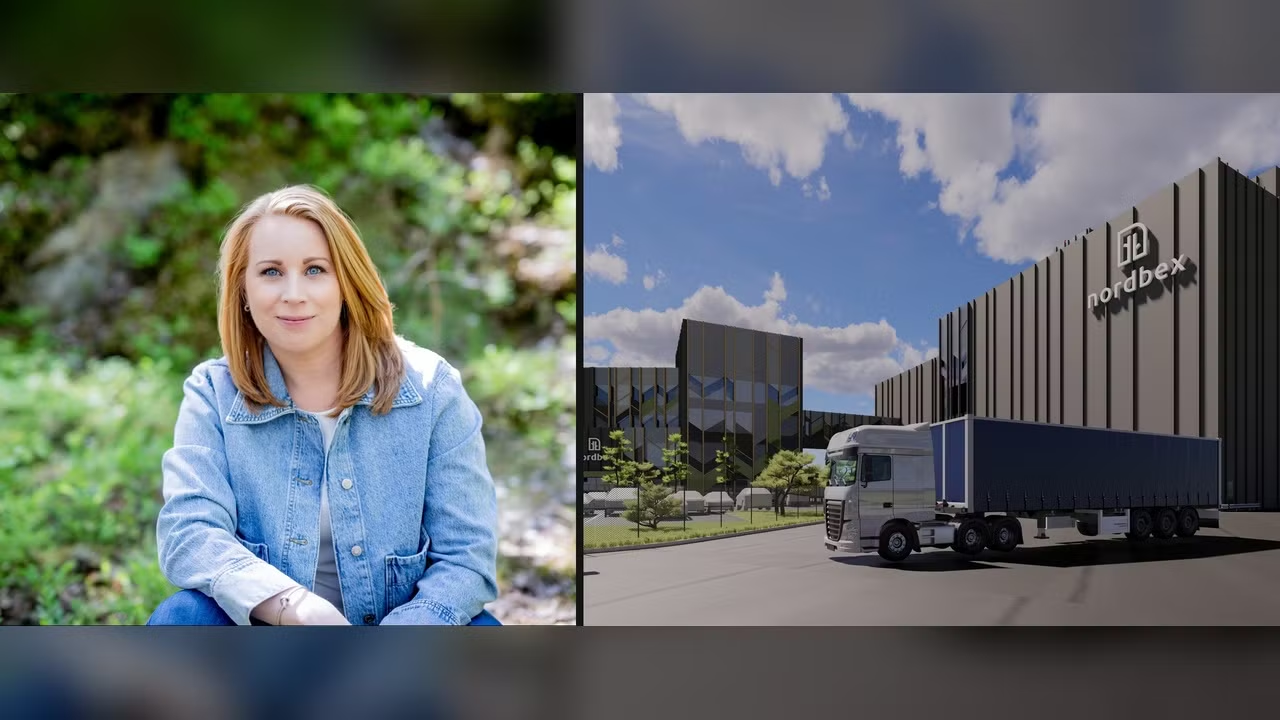
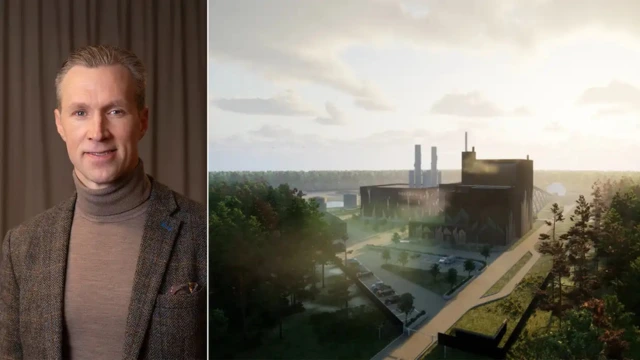
The team behind the Kista based company Nordbex has seen the rise, fall, and maturity of climate technologies up close. Now they are taking on the next step: strengthening the Swedish energy system while capturing CO2 for further use.
From a seventh floor office to large scale plans
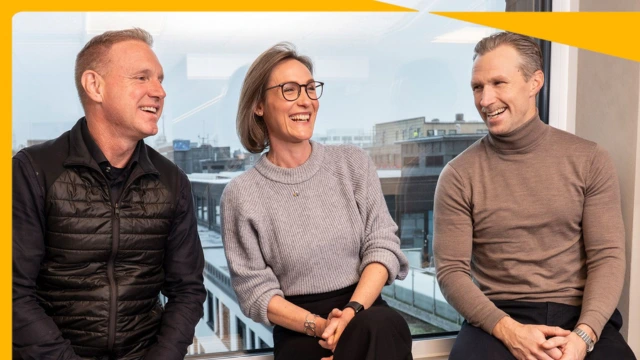
The tastefully designed office on the seventh floor could just as easily belong to a long established law firm. And yes, this is a business filled with agreements and contracts, but far bigger plans are being made here than arguing a case in court.
Impact Loop is visiting the Kista One building, right next to Kista Galleria, where a cluster of companies in deeptech, climate, materials, and energy sit side by side.
Thomas Öström is a veteran in the impact ecosystem, not least after eight years as CEO of Kista neighbor Climeon. With one index finger he sketches the company’s development curve during his time as CEO, a journey that was anything but linear.
“I told myself I wouldn’t do it again. But I couldn’t help it.”
With Nordbex, he is now at the starting line of his next journey. The idea originally came from England and the company Landmark Power Holdings, which uses natural gas for power generation while capturing 30 tonnes of carbon dioxide per year and selling it onward, among other buyers, to soft drink producers.
Thomas Öström was involved in the company and realized during the electricity price shock three years ago that something similar should be done in Sweden. He convinced Landmark to invest in Nordbex, which also included IP rights to the underlying technology.
Meeting strong demand
The company name is no coincidence, it references the concept BECCS, Bioenergy with Carbon Capture and Storage. In Nordbex’s case, however, it primarily relates to carbon dioxide utilization, or Carbon Capture and Utilization, CCU, separating, collecting, and selling CO2 for other applications.
Thomas Öström brought his office neighbor Gunilla Berggren into the journey. As a climate driven mechanical engineer, she had been drawn to the impact world’s pace and ambition. After intensive years at Eco2Energy (later Adven) and Cortus Energy, she was recruited to Nordbex, first as Head of Project Development and later as COO and Head of Sustainability.
“Now I have the opportunity to maximize climate impact for real,” she says.
The business model rests on three pillars. First, Nordbex will build modular plants that produce heat and electricity by combusting logging residues, branches and tops, from the Swedish forest industry. In the process, CO2 emissions will be separated, collected, and sold, including for the production of bio based aviation fuel. Even if the CO2 is eventually released again, climate benefit is created by replacing fossil fuels at each step.
A second option is to store the CO2 permanently in bedrock and thereby be able to sell negative carbon credits.
“The debate has focused a lot on CO2 storage, but the need for CO2 will also increase enormously now that aviation is expected to transition to 50 percent biofuels by 2050. CO2 is a fantastic molecule that can be used in everything from sustainable fuel production to sustainable products,” Gunilla Berggren emphasizes.
Planned start in Nybro with first groundworks in 2026
A Nordbex facility is intended to collect 200,000 tonnes of CO2 every year, a level comparable to the emissions of a smaller Swedish town, while supplying the local community with heat, electricity, and jobs. If all pieces fall into place, the first groundworks could take place in Nybro municipality in Kalmar County toward the end of 2026, with operations from 2029.
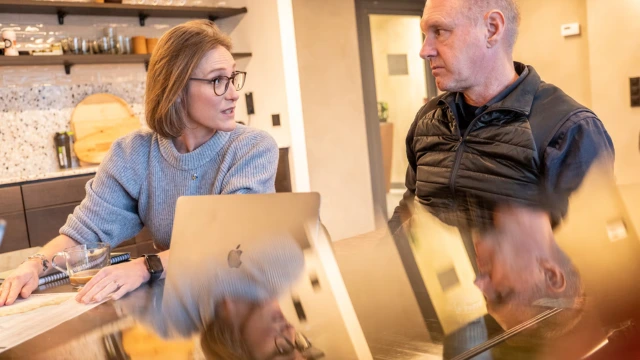
“These are long processes, and a facility needs 15 different studies to secure all permits. That’s why we will already start the work for facilities 2 and 3 now. Proximity to a train station or a port terminal is important, and in the first projects we will mainly focus on electricity area 4,” says Gunilla Berggren, pointing to a map of the country’s 137 bioheat plants.
“The common denominator is that they are starting to get old, and that they release CO2 straight into the atmosphere. We hope and believe that carbon capture will become a legal requirement from the EU in the future, but it is difficult and expensive to integrate it into an existing facility. That is where we can contribute enormously,” says Thomas Öström.
20 municipalities are interested
Just as Climeon once did, Nordbex started its journey in the Kista One building. The location is perfect, says Gunilla Berggren.
“We have a fantastic office that is significantly cheaper than in the city center, and we have running clubs and a free gym in the building. Transport links are great with close access to both the city and Arlanda. I can even cycle to work.”
There may be more journeys ahead. Around twenty municipalities have already shown interest in Nordbex’s solution, and there is a clear reason. In collaboration with Swedbank and the Norwegian energy giant Aker Solutions, Nordbex can offer municipalities fully financed projects.
“Municipalities want to spend their money on welfare, not on carbon management. We arrive fully financed and can secure the municipality’s energy supply. At the same time, we create one hundred jobs during construction alone,” Thomas Öström concludes.
“We care deeply about the climate. And if we can combine that with societal benefit, it’s fantastic. We are the first in the world to deliver power production optimized for maximum CO2 capture in this way,” Gunilla Berggren concludes.
More news and press